Blessed are those who listen to God’s calling and respond like Samuel did, “Here I am, Lord, because you have called me.”
(Abouna Yaacoub)
What is vocation?
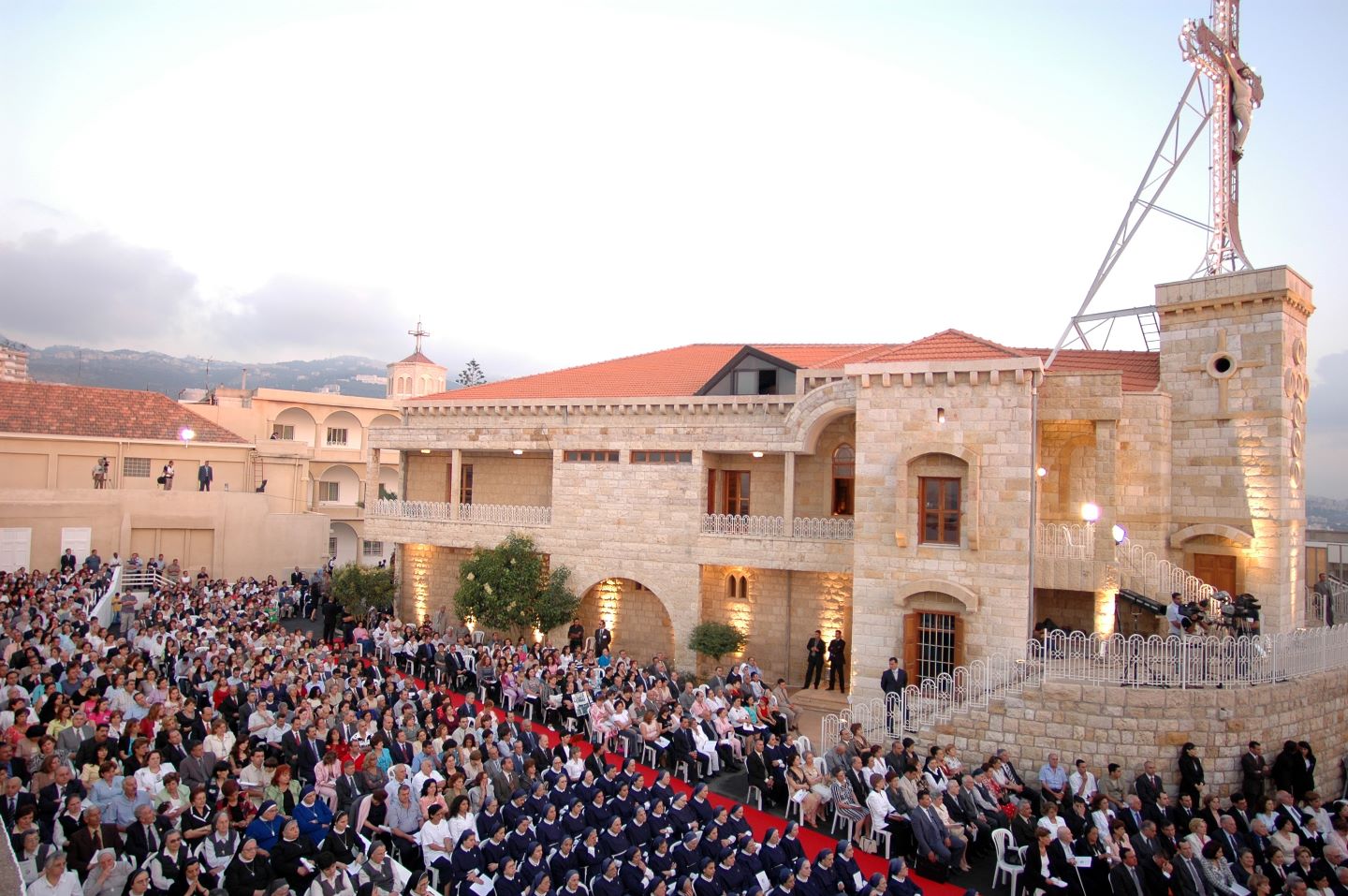
God calls everyone to follow the path of Christ: it is the universal call to holiness, the call to walk on the path of light to reach the supreme goal and the greatest joy … In His preaching, Christ called all people to follow the teachings of the Gospel, but He called each one according to his talent. He called Peter and the Apostles, but also called Zacchaeus and Magdalene, each according to the circumstances of his life and experience. Today, He invites each one of us according to his talents: some are called to priesthood, others are called to leave everything and live the biblical teachings within a monastic community, and again others are called by the Lord to live holiness within married life.
Just like holiness, monastic life can take various concrete forms: Some are called by the Lord to lead a missionary life, to work with the poor, the needy and the sick, or work in education in schools and universities; and others are called to live the silent, contemplative monastic life.
The discernment
God calls us to be holy and blameless before Him, in love. All callings stem from this fundamental and final calling. Only love, which is the essence of holiness, gives meaning and value to life. No place, religious habit, or talent can take the place of the first and final calling, which is the love of God. Each “state of life” must be an interpretation of what Bernard Lonergan calls “the dynamic state of love”.
The journey of spiritual discernment passes through conflict and spiritual balance that unmask our idols, and unveil our deceitful desires that do not come from our hearts, but rather from external influences. This cleansing work leads us to discovering God’s desire that is inherent in our human nature. And by discovering God’s desire, we discern His plan for us, because they are the same thing. The Desert Fathers teach us that one of the ways to liberate our true desire is to give up our selfish self-will.
The journey of discerning God’s will then begin with the purification of our will and desires from all obstacles and thorns that disturb our discernment. This phase is similar to John the Baptist’s period of service during which he prepared the way for the Lord and made straight paths for Him (cf. Mt 3: 3). Purification is an essential part of the journey of holiness because it restores the bond between us and our deep identity.
Saint Ignatius de Loyola teaches that we must pray to obtain detachment, and when we do obtain it, our heart embraces the will of the Lord. The will of the Lord is not the most difficult or the easiest, but rather the best and most perfect path to genuine joy.
A person who is on the journey of discernment resembles a tightrope-walking stuntman, stepping forward with caution, learning to use his weight in his favor, and using the direction of the wind, the movement of his body, and the opposite movement of the balance stick. It is only through practice and application that he learns to achieve balance. One thing is sure: progress helps achieve and maintain balance, while loitering makes one lose balance.
The above reminds us that God himself enters into this game of balance because “when the Lord contemplates the holiness of a person, He takes into consideration the nature, strength, and potential of this person”, and at the same time, He acts like an artist who freely uses the colors available on his painting. We cannot anticipate the color He will use until He has almost completely used it up, while He hardly touches the other color. The important thing is to be prepared to listen to the voice of the Lord calling us, to appreciate His wonders, and be obedient to Him. This is the difficult part of an intellectual discernment.
Practical ways of discernment
- Follow regular spiritual accompaniment
- Pray and meditate away from my daily preoccupations
- Reflect on my daily life
- Participate on a monthly basis in the religious calling discernment meetings which focus on the religious calling, its signs, its biblical, psychological, and social dimensions, and practical methods of discernment
- Learn about the life and spirituality of Abouna Yaacoub
- Participate in the mission with the sick within the framework of the religious calling discernment meetings
- Participate in the activities of the congregation in order to get closer to it and become more familiar with its spirituality.
Stages to become a Sister
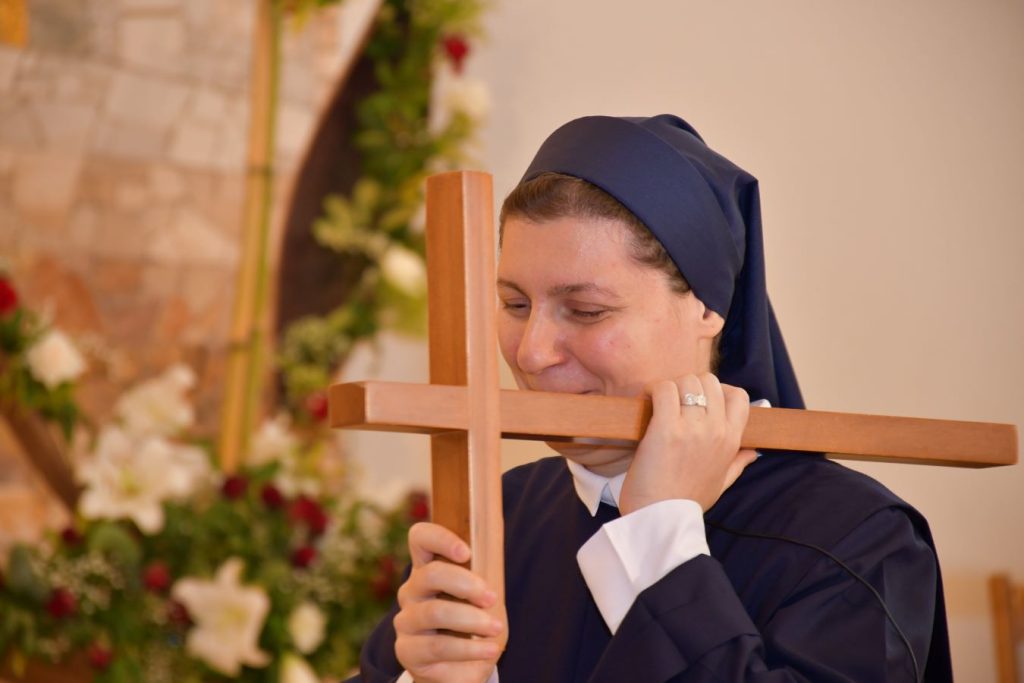
The Postulant Stage:
This stage focuses on helping young women who were accepted into postulancy to deepen their faith in Christ, achieve better self-knowledge in light of the new lifestyle, attain a realistic and sound understanding of the apostolic monastic vocation and a greater understanding of the spirituality and various missions of the association. This stage can last from six months to one year, and the postulant takes the novitiate habit on the Feast of the Cross.
The Novitiate:
The novitiate is a special time during which the young woman deepens her knowledge of the spirituality, missionary work, and community life of the congregation. The congregation, in turn, gets to know the young woman and helps her discern whether or not her personality is fit for the missionary monastic life. This stage focuses on the personal and communal accompaniment of the novice. The sister in charge of the novice’s formation should have great human and spiritual maturity and familiarity with the educational principles and methods, because it is through her that the novice will experience Christ’s free and personal love, and respond to His love with the desire to follow Him in the missionary monastic life.
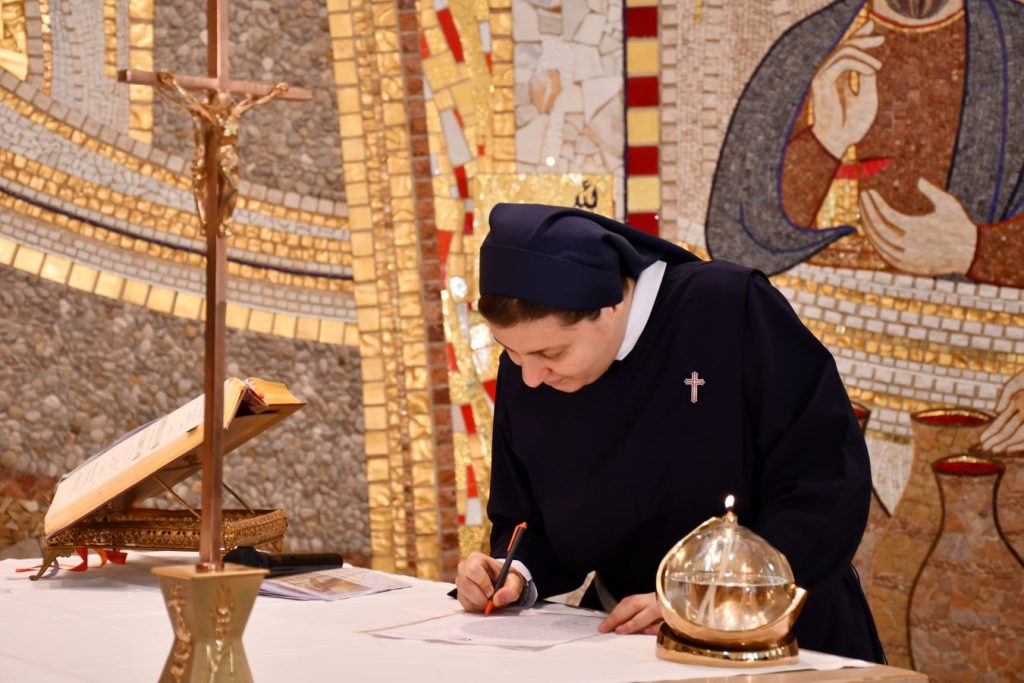
The vows
The monastic vow calls for living the three evangelical counsels and leads towards achieving the perfection of love, so the nun who is consecrated to God becomes a member of the congregation with all due rights and obligations arising from this consecration.
Spiritual retreats and formation
Each year, the Sisters make a spiritual retreat of at least six days, to renew their spiritual life. Every Sister consecrates one day per month to prayer and meditation for a continuous spiritual renewal. In this context, and for a deeper understanding of the spiritual life and the doctrinal and professional culture, the Congregation organizes sessions so that the Sisters are constantly in a position to better respond to the demands of their vocation in the Church.